Hiển thị các bài đăng có nhãn Davis Cup. Hiển thị tất cả bài đăng

Thứ Tư, 14 tháng 9, 2016

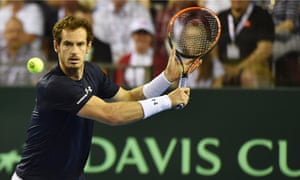
Del Potro's appeal could transcend tribalism of Davis Cup

In the absence of the injured Roger Federer -- last seen taking the mountain air in Switzerland -- Juan Martin Del Potro might just be the most adored man in tennis.
Though after all the affection and euphoria that Del Potro's comeback appearances have been generating across three continents of late, in Europe, South America and then North America, he is possibly about to reach the limit of his global appeal with a long weekend in Glasgow, the city of Andy Murray's birth.
Think of the Davis Cup semifinal between Britain and Argentina, which begins on Friday at the Emirates Arena, as the ultimate test of Del Potro's new gilded status. It has often been said that you can put Federer on any court in the world, even against a local in a Davis Cup rubber, and the crowd can't bring themselves to turn on him, and perhaps 'Delpo', as he is known, is now in that category.
Consider the noise, emotion and "craziness" in New York when he defeated Steve Johnson in the second round of the US Open -- it's not often that someone is treated so warmly when playing, and beating, an American in America. How will it play out when he faces a Scottish opponent in Scotland, before an audience which is a good two, three times more vocal than the spectators on Wimbledon's Centre Court? Perhaps, like Federer, Del Potro's appeal really will transcend the tribalism of the Davis Cup.
Though let's not be so foolish as to imagine that Del Potro -- a former US Open champion, and the silver medallist at the Rio Olympics -- should be expecting a Glaswegian love-in. Or a repeat of what happened in New York during his US Open quarterfinal defeat to eventual champion Stan Wawrinka when the galleries gave him a standing ovation and sung "Ole, ole, ole, Delpo, Delpo".
Seven years after hitting through Federer to win the 2009 US Open title, Del Potro has had another summer of euphoria. Despite his modest position in the world rankings of No. 64 as he pulls himself up the standings again -- and that's a distinct improvement on his pre-US Open status when that was a triple-digit number -- Del Potro would currently be on the top line of any worldwide popularity chart.
So above even Murray, the Wimbledon and Olympic champion, with the pair expected to play singles on Friday, in what will be a rematch of the gold-medal match in Rio. Del Potro hasn't played a singles rubber in the Davis Cup for four years, though that should hardly have a bearing on the indoor hard court in Scotland. Of far greater relevance is how he has been performing at such a high level of late, including tormenting Murray in Brazil.
"It's going to be interesting, I think. All of the British guys are playing well, and they are the favourites to win, but this is the Davis Cup so anything can happen," Del Potro has said.
Del Potro's re-emergence as a force at the top of the game -- after missing so many years to wrist operations, and coming so close to quitting -- is one reason for his surging popularity. Another is his emotional nature. There isn't a more open and emotional man in tennis; it's been a rarity this summer to see him without pink eyes and his head buried in a towel.
Recall his reaction at Wimbledon, at what was his first Grand Slam for more than two years, when he defeated Wawrinka in the second round -- as he put it, it was a victory that made him feel alive again. Listening to comments like that, no wonder the tennis public have fallen for him,and fallen hard.
That connection between Del Potro and his global followers was only strengthened by his Olympic-standard hitting and Olympic-standard emoting and hugging in Brazil, with his first-round victory over Novak Djokovic possibly the most emotional contest of any sport at the Games with both winner and loser weeping as they left the court. More tears followed when he defeated Rafael Nadal in the semifinal and again after losing a four-setter to Murray. The Olympics brought some of the happiest times of his life, he has said.
And the US Open wasn't bad either, with the singing and chanting during his match against Wawrinka moving him to tears. 'Beloved', people said, and that wasn't over-selling him.
Del Potro has the power and danger in his arm to blast a hole in Murray's and Britain's Davis Cup ambitions. And yet, for all that, Glasgow might still reveal a fondness for the man.

Thứ Tư, 22 tháng 6, 2016

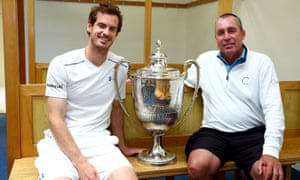
Andy Murray seeded second and Johanna Konta No17 at Wimbledon

Andy Murray has reunited with his former coach Ivan Lendl which paid immediate dividends when he won Queen’s.
Andy Murray will be seeded second at Wimbledon as the British No1 targets his third grand slam title.
Murray, who ended Britain’s 77-year wait for a men’s champion at the All England Club in 2013, will be in a separate half to the top seed Novak Djokovic when the draw is made on Friday.
In the women’s tournament, Johanna Konta is the first British female to be seeded at Wimbledon since Jo Durie in 1984. Konta is seeded 17th.
Her placing is a reward for a remarkable 12 months, in which she has reached the last 16 at the US Open and the semi-finals at the Australian Open. The 25-year-old’s world ranking has shot up from 146th to 18th.
Murray’s seeding means he cannot face the world No1 Djokovic, who currently holds all four grand slam titles, until the final. Murray has lost 13 of his last 15 matches against the Serb, including the Australian and French Open finals this year, but he has won their last two meetings on grass.
The 17-times major champion Roger Federer is seeded third and his Swiss compatriot Stan Wawrinka four. Canada’s Milos Raonic, who has hired John McEnroe as coach, is sixth.
Serena Williams will be top seed in the women’s draw as the American looks to equal Steffi Graf’s open-era record by sealing a 22nd grand slam triumph.
Williams has failed at the last hurdle in her last two major tournaments, enduring surprise defeats at the Australian and French Open finals this year.
Her conqueror at Roland Garros, Garbiñe Muguruza of Spain, is seeded second with Poland’s Agnieszka Radwanska, the 2012 finalist, third.
Seedings at Wimbledon are determined using a combination of a player’s ranking points and their results in grass-court matches. Play at the third grand slam tournament of the year starts on Monday.

List of seeds

MEN
1 Novak Djokovic (Serbia)
2 Andy Murray (Britain)
3 Roger Federer (Switzerland)
4 Stan Wawrinka (Switzerland)
5 Kei Nishikori (Japan)
6 Milos Raonic (Canada)
7 Richard Gasquet (France)
8 Dominic Thiem (Austria)
9 Marin Cilic (Croatia)
10 Tomas Berdych (Czech Republic)
11 David Goffin (Belgium)
12 Jo-Wilfried Tsonga (France)
13 David Ferrer (Spain)
14 Roberto Bautista Agut (Spain)
15 Nick Kyrgios (Australia)
16 Gilles Simon (France)
17 Gaël Monfils (France)
18 John Isner (US)
19 Bernard Tomic (Australia)
20 Kevin Anderson (South Africa)
21 Philipp Kohlschreiber (Germany)
22 Feliciano López (Spain)
23 Ivo Karlovic (Croatia)
24 Alexander Zverev (Germany)
25 Viktor Troicki (Serbia)
26 Benoît Paire (France)
27 Jack Sock (US)
28 Sam Querrey (US)
29 Pablo Cuevas (Uruguay)
30 Alexandr Dolgopolov (Ukraine)
31 João Sousa (Portugal)
32 Lucas Pouille (France)
WOMEN
1 Serena Williams (US)
2 Garbiñe Muguruza (Spain)
3 Agnieszka Radwanska (Poland)
4 Angelique Kerber (Germany)
5 Simona Halep (Romania)
6 Victoria Azarenka (Belarus)
7 Roberta Vinci (Italy)
8 Belinda Bencic (Switzerland)
9 Venus Williams (US)
10 Madison Keys (US)
11 Petra Kvitova (Czech Republic)
12 Timea Bacsinszky (Switzerland)
13 Carla Suárez Navarro (Spain)
14 Svetlana Kuznetsova (Russia)
15 Samantha Stosur (Australia)
16 Karolina Pliskova (Czech Republic)
17 Johanna Konta (Britain)
18 Elina Svitolina (Ukraine)
19 Sloane Stephens (US)
20 Dominika Cibulkova (Slovakia)
21 Sara Errani (Italy)
22 Anastasia Pavlyuchenkova (Russia)
23 Jelena Jankovic (Serbia)
24 Ana Ivanovic (Serbia)
25 Barbora Strycova (Czech Republic)
26 Irina-Camelia Begu (Romania)
27 Kiki Bertens (Netherlands)
28 Coco Vandeweghe (US)
29 Lucie Safarova (Czech Republic)
30 Daria Kasatkina (Russia)
31 Caroline Garcia (France)
32 Kristina Mladenovic (France)

Thứ Năm, 24 tháng 9, 2015

Pregnant Kim Sears supports Andy Murray at Davis Cup

Kim Sears looked thrilled as she watched her husband Andy Murray storm to victory at the Davis Cup on Sunday. The mum-to-be cheered and punched the air after Andy helped Great Britain to reach the final at the tournament for the first time in 37 years.
It was the third day in a row that Kim had supported her husband at the Emirates Arena in Glasgow along with Andy's family and friends. The 28-year-old, who is around four and a half months pregnant with her first child, kept any hint of a baby bump concealed in a loose fitting blue shirt and jeans, and clutched on to a Union Jack flag to show her support.
KimSears-
Kim Sears supported Andy Murray at the Davis Cup
Kim is a loyal supporter throughout Andy's tennis career, and can often be seen in the crowd alongside his mum Judy Murray. The tennis player recently revealed that the secret to their happy long-term relationship is partly down to the fact that they often spend time apart due to his career.
"I've found spending a bit of time apart isn't actually a bad thing," Andy told The Sun. "If you spend two or three weeks apart and then get to see each other, you appreciate it more.
"You spend six months with each other, then every single day you start arguing about little things. We don't have to travel with each other every single week to make it work."
AndyMurray-
Andy Murray has reached the final of the Davis Cup
He added: "When she comes, it's nice. It's normally at the end of a three or four-week trip. It breaks it up a little bit."
Kim has recently been working on a passion project of her own, after it was revealed she is "helping" her pet dog Maggie to "write" her own book, due for release in June. The book, entitled How to Look After Your Human: A Dog's Guide, explores how pets can bond with their human friends.

Fred Perry’s Davis Cup example can help Andy Murray over ATP finals

Andy Murray attaches huge importance to Great Britain winning a first Davis Cup since 1936.
Andy Murray will agonise for another week before declaring if he will play in the ATP World Tour Finals in London just before the Davis Cup final against Belgium, which it was confirmed on Wednesday will be held on clay in Ghent on 27-29 November.
He said after winning his three matches in the semi-final victory over Australia in Glasgow at the weekend that, because a new back injury has flared, four days would not be enough for him to switch from the hard court of the O2 Arena to clay, but he did not expect the announcement to create such a stir.
The ATP, sponsors and fans who have bought tickets in anticipation of his appearing were taken by surprise and he immediately spoke with his advisers to review his end-of-season schedule. The odds are he will play in London.
Murray’s reluctance to decide quickly reflects the weight of importance he attaches to helping Great Britain win the competition for the first time since 1936, when Fred Perry won the last of four consecutive Davis Cups before turning professional. However, if Murray were looking for inspiration to double up, he might profit from the first of those four cup triumphs in 1933 – which broke a drought of 21 years.
The demands on time were even greater then, given slower modes of travel – although the physicality was a deal less intense. Great Britain won four European Zone ties on clay and grass that summer, against Spain, Finland, Italy and Czechoslovakia, losing only two singles, then beat Australia (conveniently included in the European zone because of their geographical isolation) in the zonal final at Wimbledon.
As Jon Henderson relates in his biography, The Last Champion: The Life of Fred Perry, Great Britain’s esteem in 1933 was wretchedly low the Davis Cup team described by the Daily Express as, “that poor, despised back number of lawn tennis”. They would not remain so for long.
Great Britain beat the Americans and Perry, who still had fitness issues, drew on reserves built up as the most rigorous trainer in the game to drag himself to the line for the title decider against France just four days later. In the second singles he beat Henri Cochet, driving the famed Frenchman into the dirt over five sets, then collapsing in the dressing room.Only a week later, with Perry and Bunny Austin to the fore, they beat the acknowledged masters of the day, the United States, in the semi-final on the clay of Roland Garros. Perry travelled late, after treatment to a shoulder injury, and had his final fitness test by hitting with Dan Maskell 48 hours before the tie.
If the similarities are beginning to sound eerily similar, the story of triumph for Perry and Great Britain on the dreaded foreign clay ought to lift the Scot’s spirits.
The physicality, tempo and attention to detail in the game has changed markedly, perhaps, but the demands of going to Ghent’s Flanders Expo to play on a drop-in clay court in November are not that far removed from those that confronted Perry and his team-mates in 1933. They prevailed – and went on to help Great Britain rule for another four years.